Biological Products:
Bioaugmentation products for Wastewater applications in Papermills, Refineries, Chemical, Tanneries, Municipalities, Textiles, Steel, Agriculture, Animal feedlot, Gun Powder plant, Food and Beverage- Dairy Products, Orange Juice factory, Wineries, Cookie factory, Vegetable processing plant, Meat packing, Barbecue Restaurant, Aquaculture, Ornamental Ponds for algae control, CAFO, Nursing homes, Military, Campgrounds, Universities, Regulatory agencies
Lab Services:
Filamentous Identification Lab Service. One reason to identify filaments is to determine the filaments characteristics and then determine the type present. If the type is found out, a root cause can usually be associated with a particular filament. If the cause is known, then a correction can be made to alleviate problems. Chlorination is only a quick fix. Without process changes, filaments will grow back after chlorination. Wastewater Biomass Analyses and Cooling Tower Analyses also available
Training Materials:
Training is an integral part of any job. Not everyone is at the same level of training. Many people want beginning concepts and basics. Some need technical information or troubleshooting. Some want equipment, technology or process information. We have developed a full set of Basic training, Advanced training, Filamentous Identification the Easy Way as well as custom training CD's Manuals. We also provide hands-on training classes and soon will have an Online "E-University".
Audits and Consulting:
At Environmental Leverage® Inc., we have a team of experienced individuals who come into your plant with a fresh pair of eyes. The system is checked from influent to effluent. System optimization, equipment efficiency and operational excellence are key components explored. Key Benefits Equipment efficiency Total Cost of Operation reductions Reliability and safety An onsite audit is conducted to examine system parameters, process controls, and current monitor and control procedures. A physical walk-through is conducted, process flow diagrams are examined, previous design criteria are examined and current standard operating procedures are evaluated along with data logs.
|
Grease removal in lift stationsLatest News!
What's New!
We have just added "Virtual Audits" to our capabilities. Check out our new Services. We are in the process of developing new courses for our ""Online E-University" in order to meet the needs of our global customers that cannot travel to our public classes.Visit our new website www.WastewaterElearning.com/Elearning
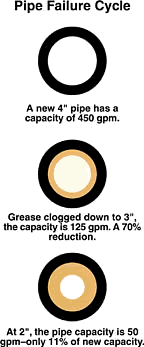
Operators of sewerage systems know that grease and FOG in lift stations is a major problem. The grease obstructs floats and reduces the life of pumps leading to SSO's and a need for frequent service. Obstruction by grease is the most prevalent cause of force main backups and sewage overflows, costing the industry billions of dollars annually. The majority of sewer line blockages are caused by grease build-up as opposed to debris.
Recalcitrant long chain fatty acids make up approximately 80% of grease
deposits found in lines and grease traps and require extensive physical
cleaning to avoid blockages, odors, and the passage of grease in effluents
to be re-deposited downstream. Bioaugmentation has been used to break down
difficult to degrade substances preventing them from causing blockages,
odors, or accumulations downstream. In field tests on grease traps and lift
stations this technology has
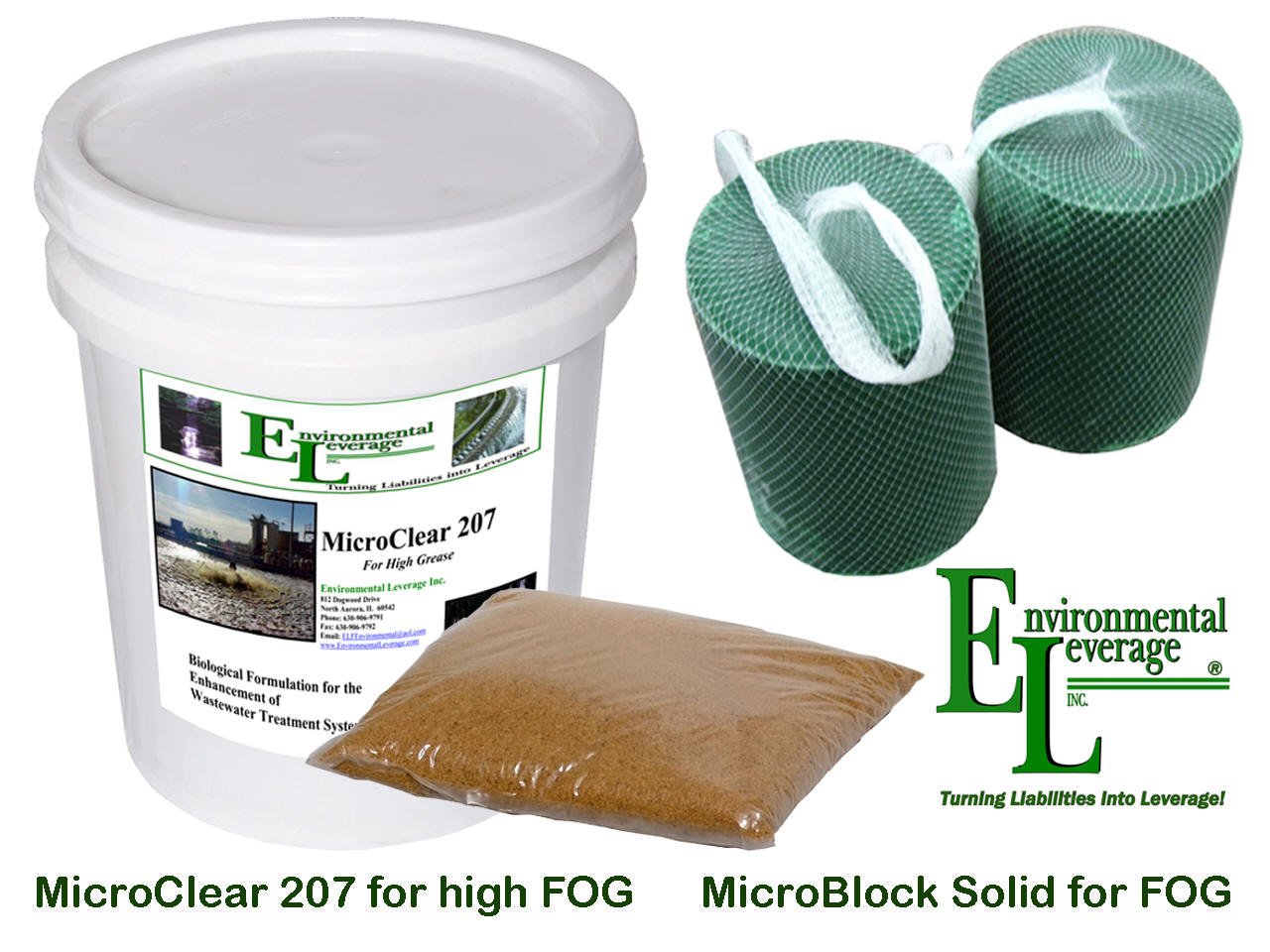
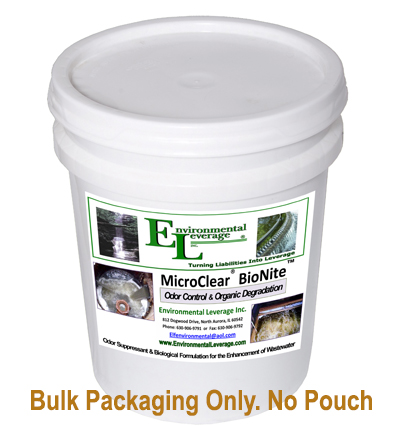
Click On the Product Picture for Information Biological treatment with Environmental Leverage is a simple, efficient and cost effective remedy against grease in collection systems and wastewater treatment plants. These products contain a specially formulated range of adapted high-performance microorganisms developed for use in the biological wastewater treatment of greases, fats and oils (FOG). As well as microorganisms, our products contain surface tension depressants and penetrants, which loosen and liquefy heavy grease deposits, thereby assisting in their biodegradation. For Grease and Sewer control, the powdered products and solid bio block products, also contain specialty penetrants and surfactants, which loosen and liquefy heavy grease deposits, thereby assisting in their biodegradation
Bacterial Product Benefits to Sewer Line Dramatically reduces line blockages
Benefits to Lift Station Bioaugmentation Dramatically reduces sewer grease build-up
Bioaugmentation Benefits to Activated Sludge System Dramatically reduces grease build-up 50-70% FOG reductions are the norm over a 3 month period Increase in oxygen transfer efficiency Lower Operating Costs Reduces Sludge Production Lowers Solids Handling Costs
Helps Systems Meet NPDES Permit Requirements Lowers electricity usage in pumps Reduces maintenance costs Lowers corrosion due to sulfate Enhance biological activity Improve the reduction of BOD, COD, and TSS in final effluent Eliminates the need for personnel to handle unsafe chemicals No pre-mixing, pre-measuring or pre-soaking Inexpensive, Safe and easy to use
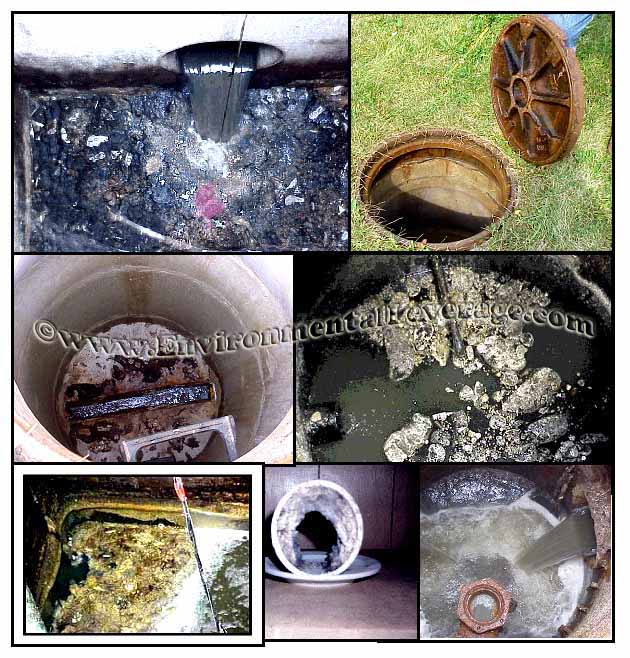
Compare this treatment approach (in the pictures below)to traditional cleaning/pumping/hauling costs of thousands of dollars or in-ground repair costs of tens of thousands! And there is no guarantee that the same grease-related headaches won’t crop up again and again at the very same location after traditional maintenance. Traditional “remedies” don’t solve the problem but act more like a Band-Aid, because the same contributors to the system will keep pouring the same grease down their drains & disposals, perpetuating the same scenario over and over again. Bioaugmentation is a proven and PROACTIVE approach to naturally degrade these clogging wastes at their biological source, and prevent future buildups/failures.
Lift Station before and after Bioaugmentation Program
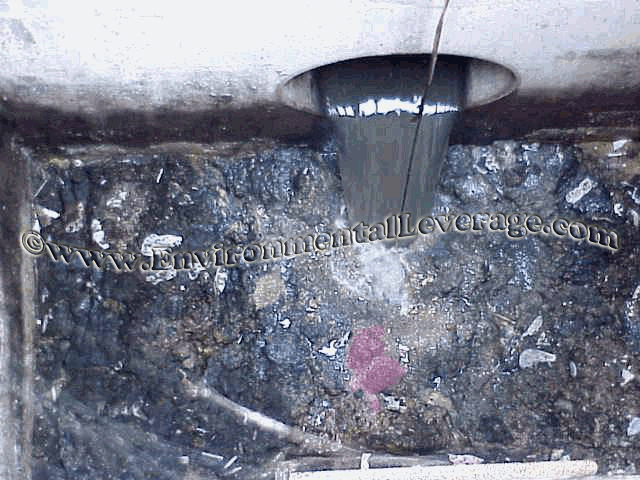
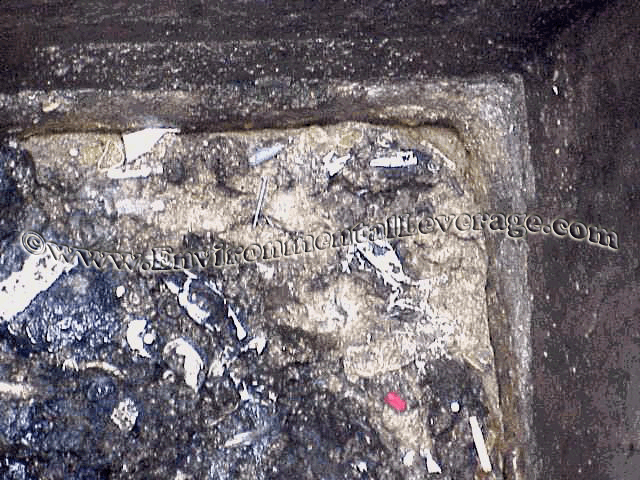
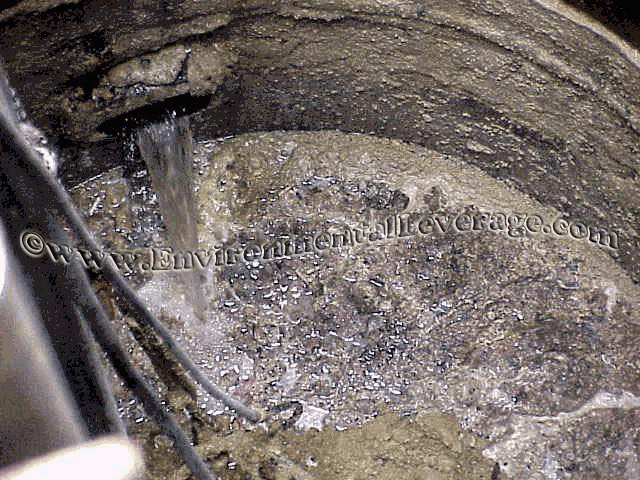
Above 2 images are prior to Bioaugmentation program- heavy grease and solids
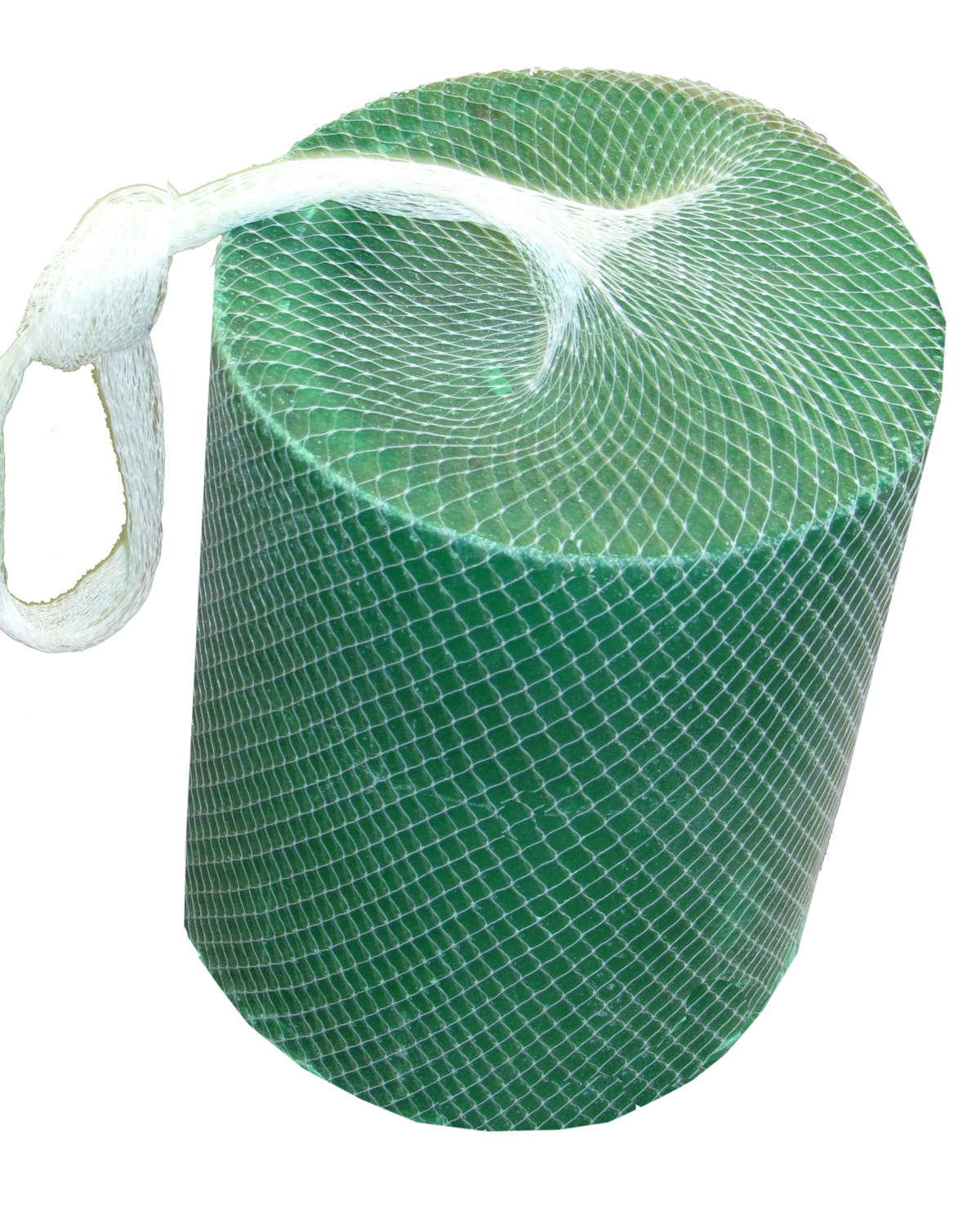
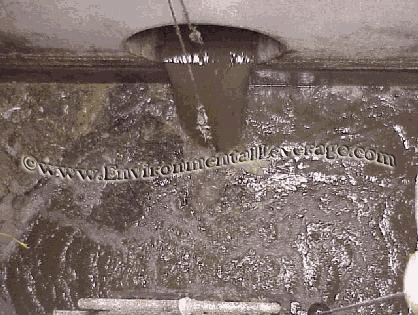
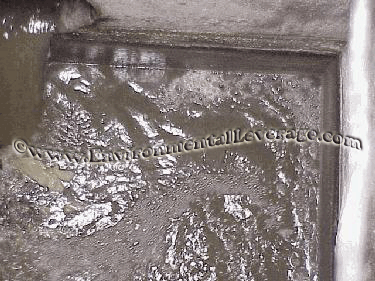
Now look at the same lift station in the above 2 images after bioaugmentation program was administered. Click on the above MicroBlock pictures for Product bulletin.
I need to get rid of the grease and FOG in my lift station. I heard about using bacterial products. How do I know if they are working? Lift stations commonly end up with build-ups of grease that can create a ring around the lift station, collection build-up on pumps, chains, floats, sidewalls, etc. This can cause mechanical problems, cause plugging, interrupt service and cause terrible odors. Operators know what that means: jetting the lines, pumping & hauling off the grease at high costs, or even digging up and replacing a wet well and/or feeder lines at extremely high capital costs.
Grease is one waste that the sewer system cannot handle and therefore needs to be kept out of the system, but most often is not. An additional concern is that since the government raised the temperature required by restaurants and food establishments from 180 F to ~210 F, grease traps are not working as designed and grease that used to be trapped onsite is now washing through the lines until the temperature of the water cools down and then hardening later on. This usually happens somewhere in the lines or in the lift station.
Our biological additives are a safe, natural environmental friendly way to
help assist in the cleaning up of a lift station, but they are not miracle
Bacteria not only clean the lift stations if properly applied, they can
help clean up the lines and can lighten the load at the treatment plant and
reduce solids or help with BOD and TSS loading. Again, it is all in the
program addition, conditions such as flow, temperature and loading that
impact whether a program will impact just the lift station, the pipes or the
treatment plant. The correct dosing and application will
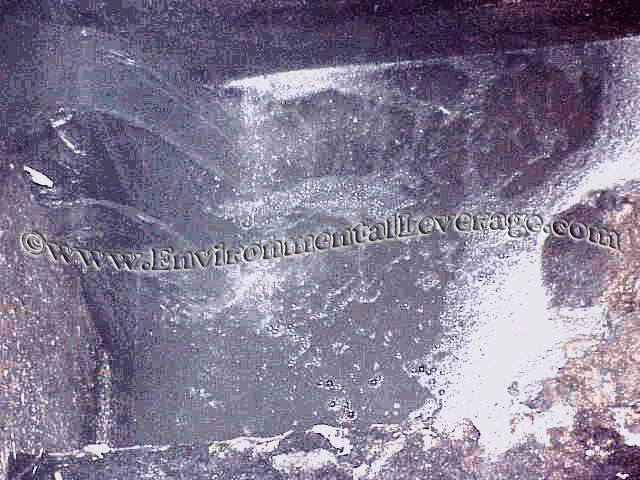
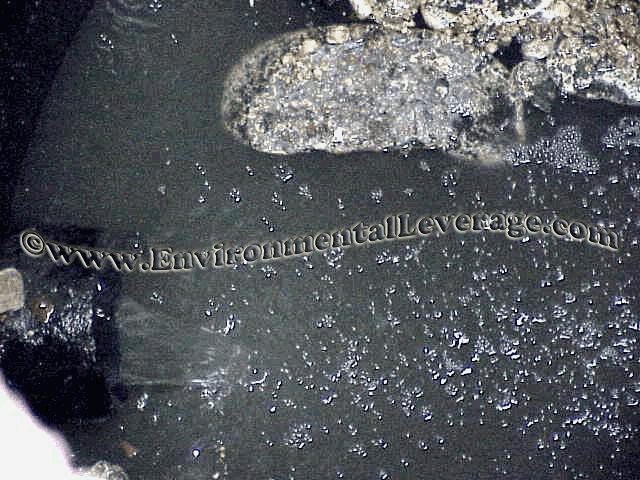
What are signs that the product is working- Foaming in the lift station- white foam at first shows the bugs are
in a high growth phase, as the foam turns to a light brown, they are getting
a little older.
These have been called "Floating Turtles"- Hard solid formations that
float around in the lift station. These can interfere with the pumps and
Application of product is improper here, pink product all over the top of
the grease and not really in contact with the water.
To the right. The image is the same lift station as above/left after a biological program with our products! The majority of the grease is gone, there is clear, free running water!
More information on Grease (FOG), Click links below:
1 Collection systems and Sewers 5 Collection systems troubleshooting for Grease and Oil (FOG) 7 Controlling FOG in Municipalities and Industrial Facilities with MicroClear® BioNite™
What is growing in your Collection System?
Bioaugmentation Solutions for Lift stations,
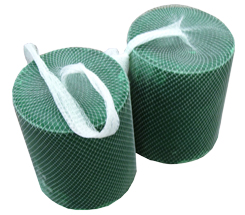
Wet Wells and Collection Systems; 1 MicroBlock - Solid block biological products that are specifically formulated and packaged for use in lift stations and large restaurant grease traps to remove grease build-up and help increase degradation capabilities.
2 MicroClear 207 - Lift Station Formulation bacterial formulation is used for softening and degrading food type fat, oils and grease in lift stations but can also be used in any high grease environment.
3 Restaurant formulation-This biological product is a high strength formulation developed to degrade fats oils and grease quickly. It can be used in restaurants, grease traps and drain fields where food based grease is a problem.
4 Sewer Formulation - This product is an improved biological product for Odor Control and FOG digestion. Specifically formulated and packaged for use in sewers to help degrade grease build-up and stop blockage.
|
 demonstrated a visible difference in the
elimination of grease build-ups in trial periods shorter than one month.
demonstrated a visible difference in the
elimination of grease build-ups in trial periods shorter than one month.
 Fats,
oils and grease (FOG) are typically the cause of many problems. Grease is
"hydrophobic," which means it prefers to cling to surfaces that are free of
water. Large amounts of oil and grease in the wastewater that goes down a
drain can cause sewer lines to clog sewer lift station failures, wastewater
treatment plant problems and environmental concerns. Grease typically will
build from the top down or around the sidewalls and at the water level in
the sewer line while heavier debris may collect on the bottom as the
wastewater flows through the sewer line. Grease can continue to build up and
restrict the flow of wastewater. Sometimes, a layer may break off and large
pieces can create plugging downstream. Eventually, grease will form a total
blockage in the sewer line if left untreated.
Fats,
oils and grease (FOG) are typically the cause of many problems. Grease is
"hydrophobic," which means it prefers to cling to surfaces that are free of
water. Large amounts of oil and grease in the wastewater that goes down a
drain can cause sewer lines to clog sewer lift station failures, wastewater
treatment plant problems and environmental concerns. Grease typically will
build from the top down or around the sidewalls and at the water level in
the sewer line while heavier debris may collect on the bottom as the
wastewater flows through the sewer line. Grease can continue to build up and
restrict the flow of wastewater. Sometimes, a layer may break off and large
pieces can create plugging downstream. Eventually, grease will form a total
blockage in the sewer line if left untreated.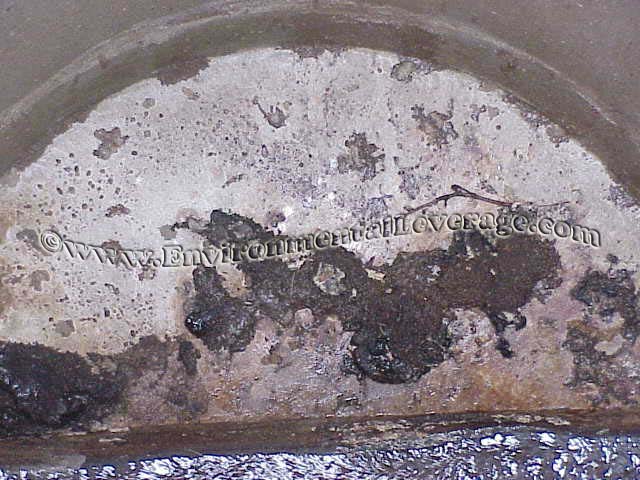 workers. There is a limit to what they can do, how they do it and when they
will work. Bacteria can naturally degrade the fats, oils and grease, as well
as any other organic materials that enter a lift station of pipe. They
actually consume these as a food source, as opposed to traditional methods
of surfactants, enzymes or chemicals that may have eliminated the grease in
the lift station, but just transferred them down the pipe and eventually
into the wastewater treatment plant and can cause upset conditions.
Biological products cannot in a realistic time degrade some of the solids
such as plastics, condoms, etc. that wind up in the lift station. Some of
these eventually build up and must be mechanically removed.
workers. There is a limit to what they can do, how they do it and when they
will work. Bacteria can naturally degrade the fats, oils and grease, as well
as any other organic materials that enter a lift station of pipe. They
actually consume these as a food source, as opposed to traditional methods
of surfactants, enzymes or chemicals that may have eliminated the grease in
the lift station, but just transferred them down the pipe and eventually
into the wastewater treatment plant and can cause upset conditions.
Biological products cannot in a realistic time degrade some of the solids
such as plastics, condoms, etc. that wind up in the lift station. Some of
these eventually build up and must be mechanically removed. 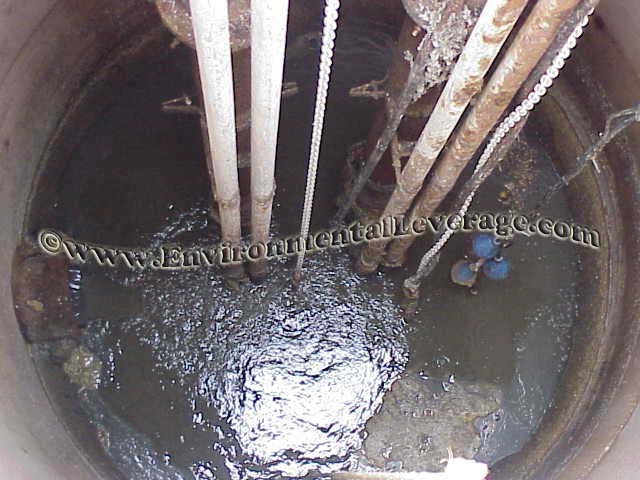 impact
different variables and determine the impact on all three places. In the
past, bacterial vendors or sanitary workers worried only about the lift
station. Cleaning up the grease and quickly was the only concern. High
levels of bacteria were added to the lift station. This may have cleaned up
the lift station, but it just moved the grease down the pipes, clogged up
the lines and caused high foaming at the treatment plant. Newer more
conservative methods are now used to successfully dose a biological program
in a lift station. Slower is better, although many people are anxious and
say the product is not working.
impact
different variables and determine the impact on all three places. In the
past, bacterial vendors or sanitary workers worried only about the lift
station. Cleaning up the grease and quickly was the only concern. High
levels of bacteria were added to the lift station. This may have cleaned up
the lift station, but it just moved the grease down the pipes, clogged up
the lines and caused high foaming at the treatment plant. Newer more
conservative methods are now used to successfully dose a biological program
in a lift station. Slower is better, although many people are anxious and
say the product is not working.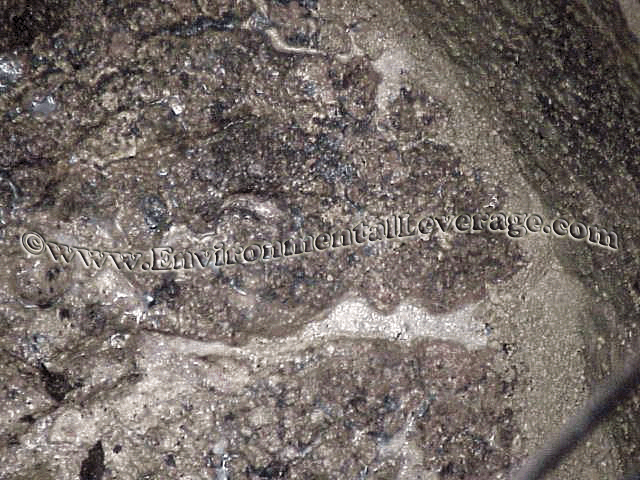
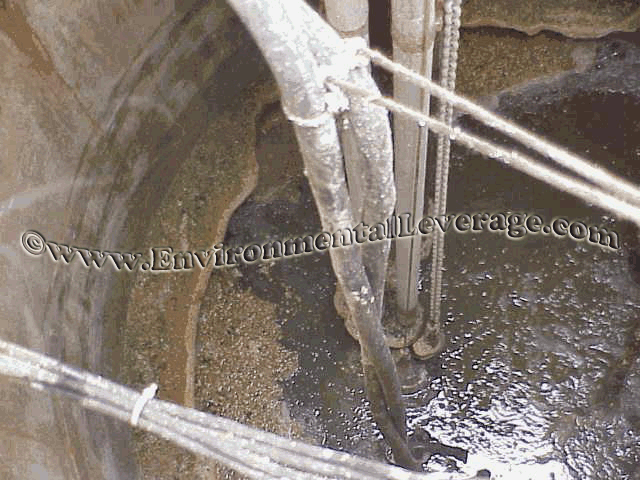 If
there is a grease ledge, this is very important, since the water level must
be a bit higher for a short period of time to allow the bacteria access to
this grease and not just during high flows.
If
there is a grease ledge, this is very important, since the water level must
be a bit higher for a short period of time to allow the bacteria access to
this grease and not just during high flows.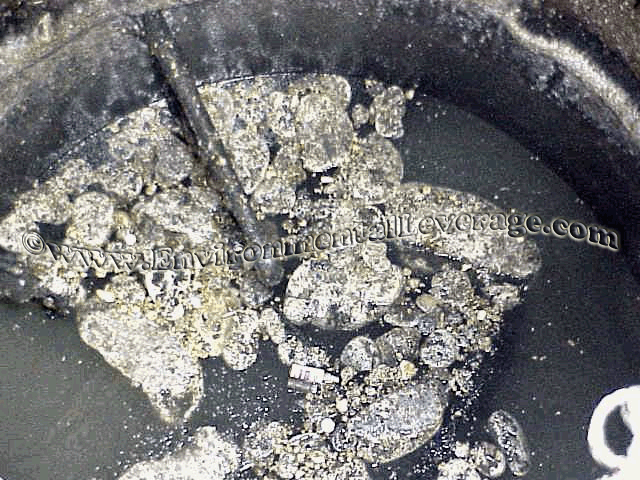 can clog the pipes. Sometimes using a liquid product to spray on these
can help reduce their size and shrink them faster.
Raising or lowering the float will not impact situations with floating
grease turtles.
can clog the pipes. Sometimes using a liquid product to spray on these
can help reduce their size and shrink them faster.
Raising or lowering the float will not impact situations with floating
grease turtles.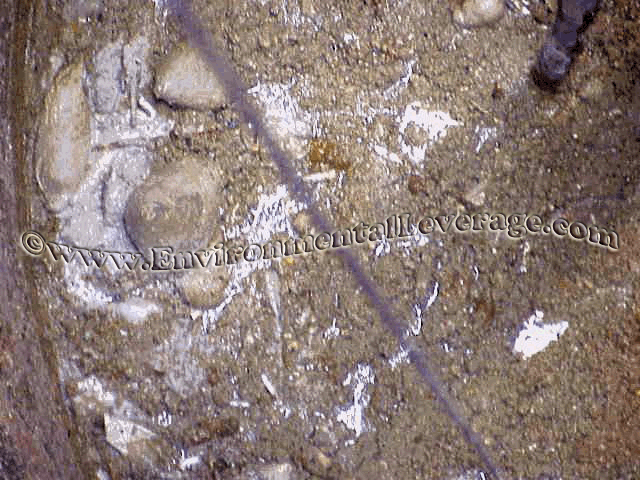 White
milky water indicating bacteria is starting to work, cracks are starting to
form in the grease; it is starting to soften and a little foaming is
present.
White
milky water indicating bacteria is starting to work, cracks are starting to
form in the grease; it is starting to soften and a little foaming is
present.