Biological Products:
Bioaugmentation products for Wastewater applications in Papermills, Refineries, Chemical, Tanneries, Municipalities, Textiles, Steel, Agriculture, Animal feedlot, Gun Powder plant, Food and Beverage- Dairy Products, Orange Juice factory, Wineries, Cookie factory, Vegetable processing plant, Meat packing, Barbecue Restaurant, Aquaculture, Ornamental Ponds for algae control, CAFO, Nursing homes, Military, Campgrounds, Universities, Regulatory agencies
Lab Services:
Filamentous Identification Lab Service. One reason to identify filaments is to determine the filaments characteristics and then determine the type present. If the type is found out, a root cause can usually be associated with a particular filament. If the cause is known, then a correction can be made to alleviate problems. Chlorination is only a quick fix. Without process changes, filaments will grow back after chlorination. Wastewater Biomass Analyses and Cooling Tower Analyses also available
Training Materials:
Training is an integral part of any job. Not everyone is at the same level of training. Many people want beginning concepts and basics. Some need technical information or troubleshooting. Some want equipment, technology or process information. We have developed a full set of Basic training, Advanced training, Filamentous Identification the Easy Way as well as custom training CD's Manuals. We also provide hands-on training classes and soon will have an Online "E-University".
Audits and Consulting:
At Environmental Leverage® Inc., we have a team of experienced individuals who come into your plant with a fresh pair of eyes. The system is checked from influent to effluent. System optimization, equipment efficiency and operational excellence are key components explored. Key Benefits Equipment efficiency Total Cost of Operation reductions Reliability and safety An onsite audit is conducted to examine system parameters, process controls, and current monitor and control procedures. A physical walk-through is conducted, process flow diagrams are examined, previous design criteria are examined and current standard operating procedures are evaluated along with data logs.
|
© Filamentous ID The Easy Way™ We Have Several Upcoming WW Training Seminars - Click HereWhat's New!
We have just added "Virtual Audits" to our capabilities. Check out our new Services. We are in the process of developing new courses for our ""Online E-University" in order to meet the needs of our global customers that cannot travel to our public classes.Visit our new website www.WastewaterElearning.com/Elearning
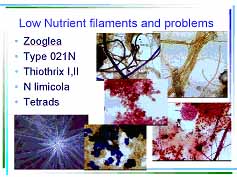
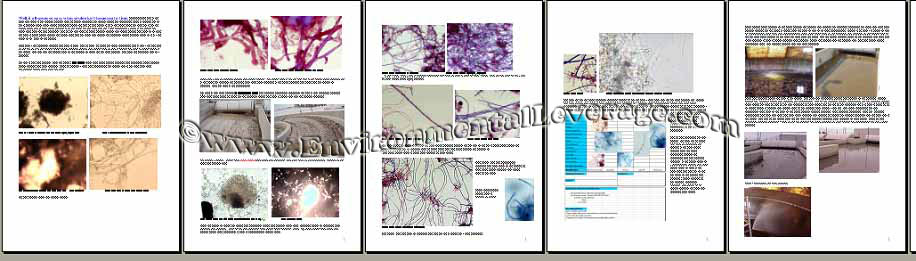
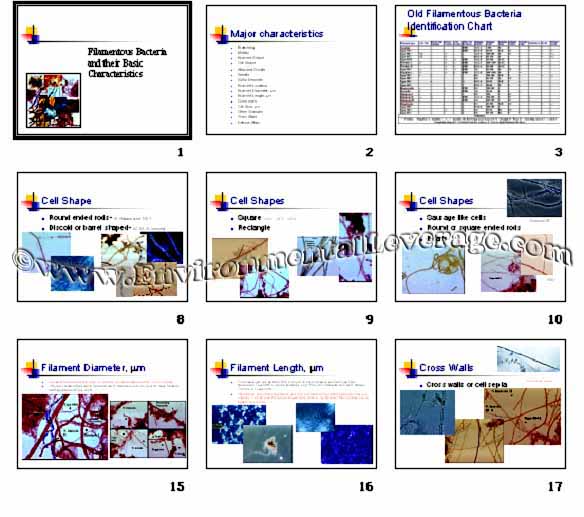
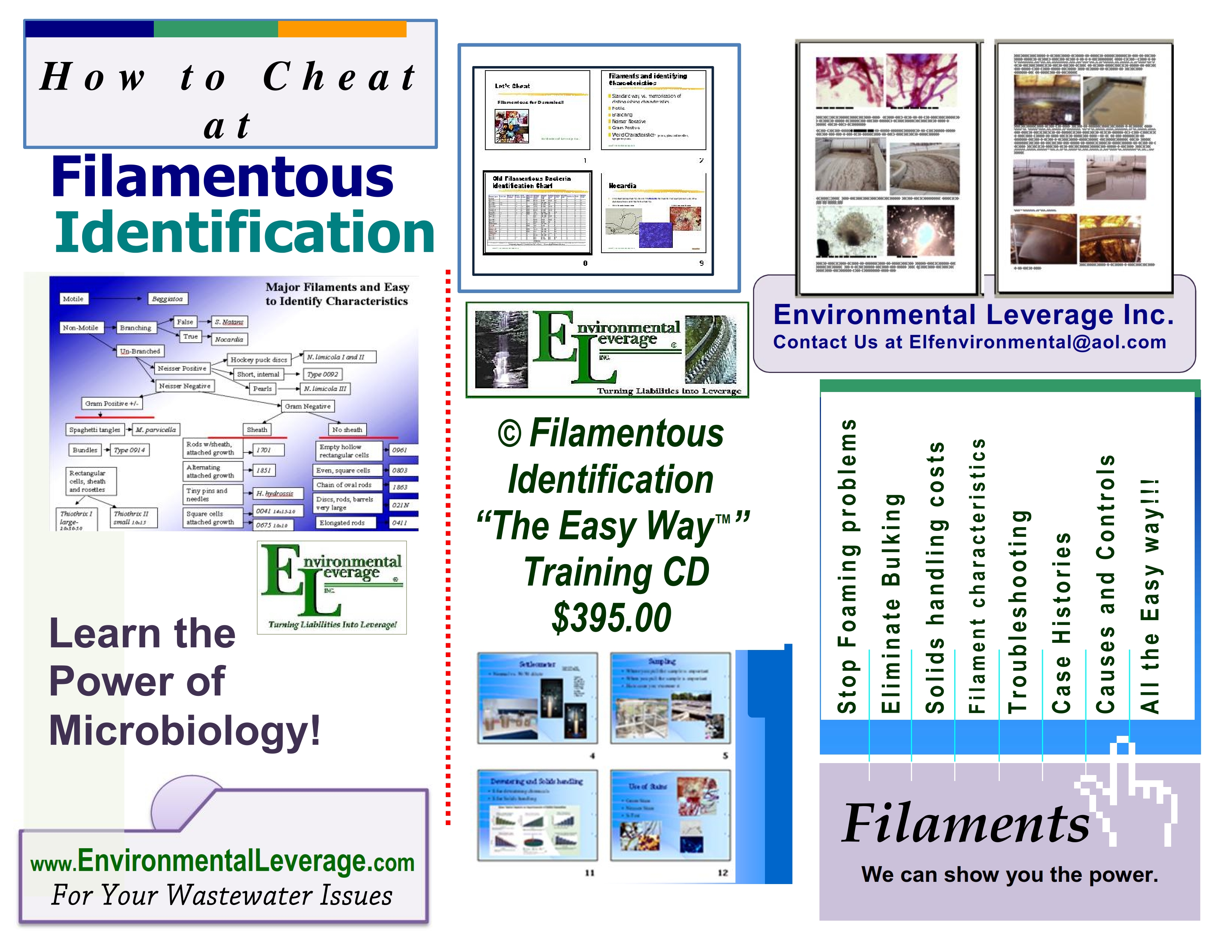
This Training program is really more like a Filamentous Encyclopedia.
There are tons of files, thousands of photos and examples. There are
filaments, Case Histories, Troubleshooting, Training, Causes and Controls,
Photomicroscopy, Foaming, Bulking, Bridging, Sample procedures, Staining,
and when you get right down to it,
The Most Comprehensive Filamentous Bacteria Training Program you will find!! Filamentous Identification The Easy Way™ CD / or Flash Drive Now released this Advanced CD for Filamentous Identification. Learn how to troubleshoot your own plant & existing problems to run your plant more efficiently. Learn the causes from each filament. Click sentence below for order form & we will contact you back or call us at 630-906-9791 or email admin@environmentalleverage.com.
All items on the CD's & Learning Materials are copyrighted. At no time, unless with written permission from Environmental Leverage (Tracy Finnegan) is the material on these CD's to be used for commercial training purposes.
Filamentous Bacteria - © Filamentous Identification The Easy Way™ !!! Table of Contents: What are filaments General Overview How they impact a plant How to examine them Filamentous Identification- methods used Equipment Gram Stain Neisser Stain LactoPhenol Cotton Blue Sudan Black Additional Stains Using the microscope- tips and procedures Slides Objectives Timing Preparation Digital Photomicrographs Recording your results Filament and Floc Characteristics Sampling Overall Biomass characteristics Filament Characteristics Individual Filaments Grouping Filaments to find associated causes Zooglea, fungi, tetrads and other problem causing organisms Bulking vs. Bridging Internal vs. external Foaming Causes and controls Types and process controls Cheating and using individual characteristics to skip to the chase Let's get to the easy way Plant Troubleshooting Causes of Filaments Controls of Filaments Bibliography References Interesting websites for more information
©
Filamentous ID The Easy Way™ is a great CD / or Flash Drive, of training packed full of
filaments and identification training. Only $395.00
Our version of "Filamentous Identification for Dummies"!!!We have had tons of people ask us to train them on how to perform a
Filamentous Identification. After seeing thousands of sample, you start to
learn a few tricks.
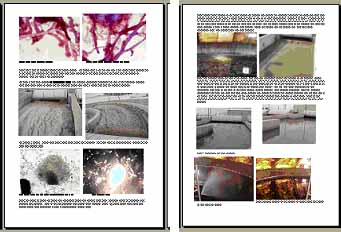
There are Case Histories with plant photos, troubleshooting, causes and controls of the filaments present, photomicrographs and how to fix and optimize the plant. Sample Case History
There are numerous training programs from our two day hands on training class for Filamentous Identification
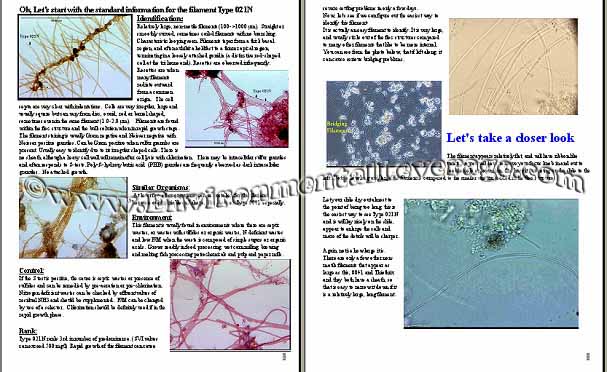
Each Filament has its own section, with tons of photos, training materials, identifying characteristics, troubleshooting and causes and controls. See a PDF example sheet with Type 021N
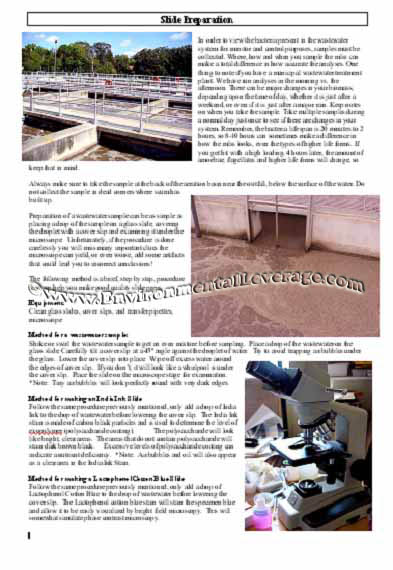
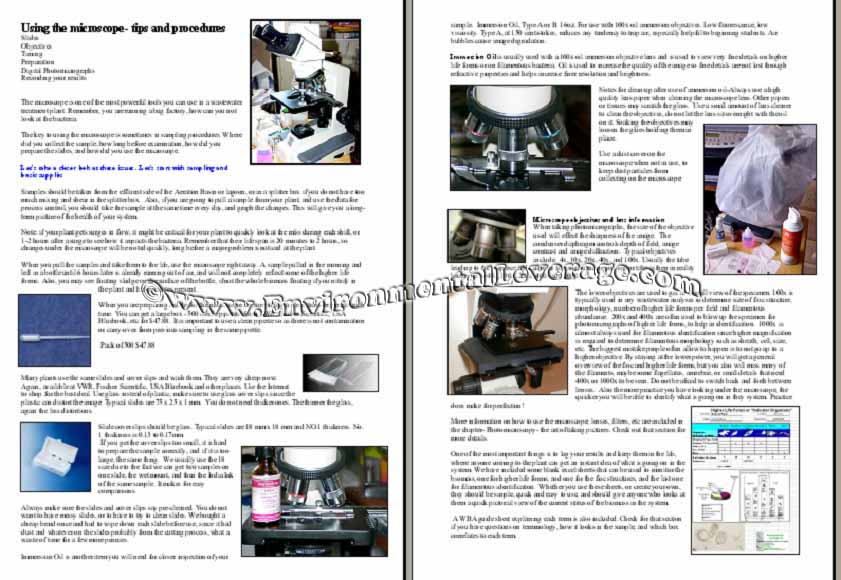
There is a section on how to use the microscope, sample collection and preparation, stains, how to take photomicrographs, lighting, storage, graphing and correlations.
Filamentous Bacteria Causes and Controls It is one thing to learn an individual filament and the characteristics. Unfortunately the filaments do not play by the rules in real life and many times there are more than one type of filament in a plant. Grouping Filaments-This section shows you how to group filaments, find common causes and controls quickly and easily!
How to troubleshoot a plant in order to make it run more efficiently and also how to make your life easier to run the plant is really the whole goal of the training! This is not high school or college and you get an A+ if you score the correct results on the filamentous identification. The whole purpose of doing the analyses is to find out how to make your plant work better, cheaper and easier!
We developed a guide to understanding the terms for using the microscope as one of the most powerful tools you can have to run your "Bug Factory" because that is in reality what a wastewater treatment plant is! Click below to order Filamentous ID Training CD / Flash Drive Start your way now to a cleaner, brighter effluent with fewer hassles in your waste treatment plant.
All items on the CD's & Learning Materials are copyrighted. At no time, unless with written permission from Environmental Leverage (Tracy Finnegan) is the material on these CD's to be used for commercial training purposes.
Send Us Your Biomass Sample for Troubleshooting. Same Day Analysis Service. Click on links below. 1 click here for: biomass analysis service information on website.
The Most Comprehensive Filamentous Bacteria Training Program you will find!!! Click the links below for information: 2 More information on filaments and control 3 Additional Training Materials 4 Wastewater Training Materials Catalog
How are your bugs doing?
Email us at admin@EnvironmentalLeverage.com or Call 630-906-9791
|
 A
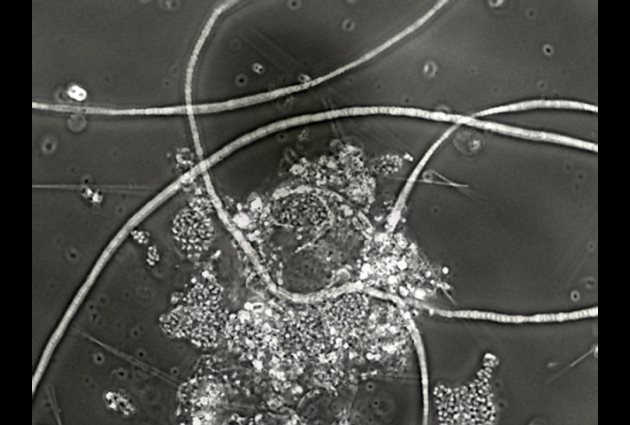
New Way to Look at Filaments. The Easy way™ Simplified Identification.
A
New Way to Look at Filaments. The Easy way™ Simplified Identification.